HIPAA-Compliant AI Deployment
Three deployment patterns for medical practices that eliminate phone abandonment, cut no-shows by 41%, and capture after-hours demand — without ever exposing Protected Health Information.

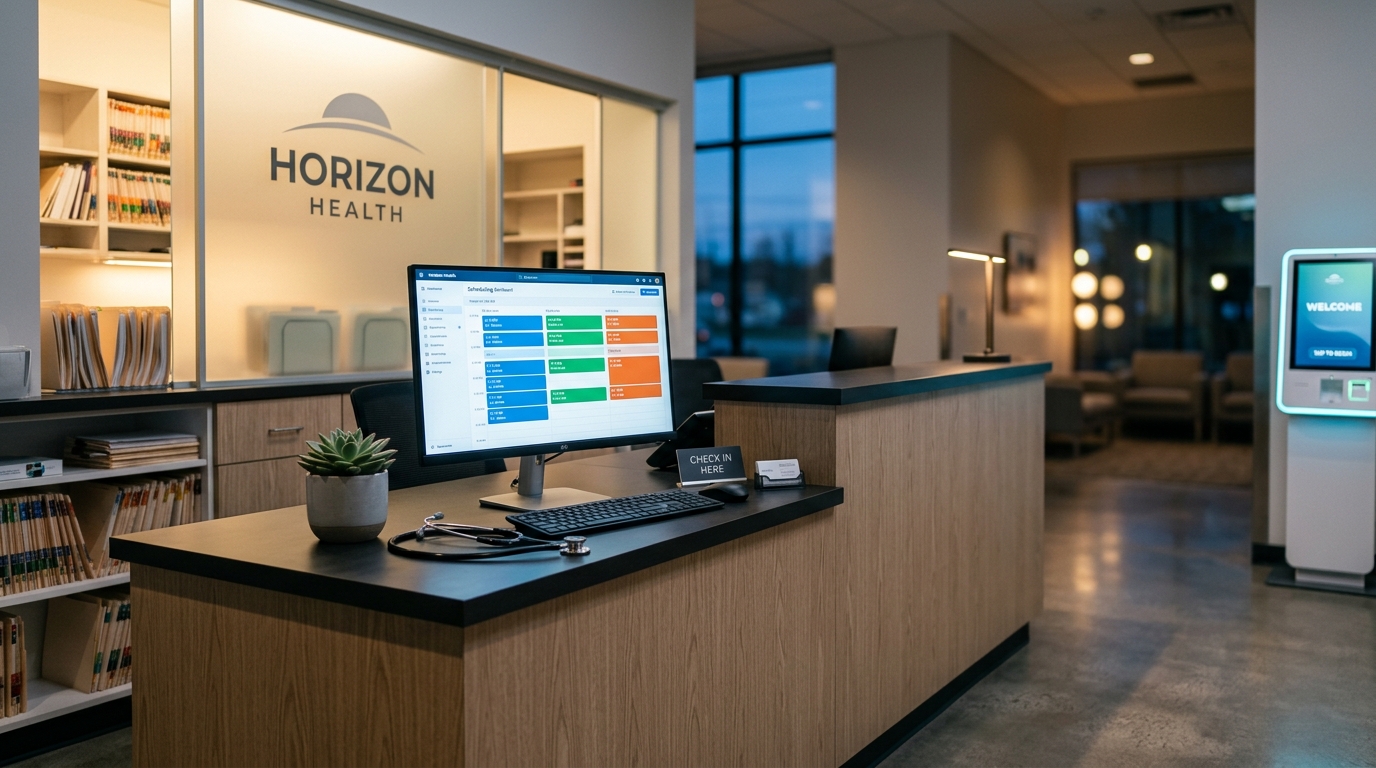
The front desk is the most expensive bottleneck in healthcare operations.
The Healthcare AI Landscape
The Numbers Driving Adoption
Physicians Using AI Tools
Up from 38% in 2023 (AMA)
Annual No-Show Cost (U.S.)
~$200K per provider/year
Calls Outside Business Hours
80% hang up on voicemail
ROI on Healthcare AI
$3.20 per $1.00 invested
The Front-Desk Crisis
Why Healthcare Operations Are Breaking
90% of patients who switch providers cite "difficulty doing business with the clinic" — not quality of care.
Phone Abandonment
Average hold time (HFMA target: ≤50 seconds). 60% of patients hang up after 60 seconds. Abandonment rate: 7–9.5% nationally, up to 28% in understaffed clinics.
No-Show Epidemic
Lost per provider per year. National rates: 15–23% general, up to 40% in behavioral health. Patients who miss once are 70% more likely to never return.
Staffing Collapse
Annual front-desk turnover rate. Each departure costs ~$76,000 (200% of salary). 46% of all healthcare workers report burnout. U.S. faces 86,000 physician deficit by 2036.
The Framework
Three HIPAA-Compliant Deployment Patterns
From zero-PHI exposure to full BAA-backed integration — choose the pattern that matches your practice's risk tolerance and compliance posture.
The "Zero-PHI" Frontline Router
AI handles triage, FAQs, and scheduling without ever requesting or storing Protected Health Information.
Result: 60% of call volume deflected from front-desk staff with zero HIPAA exposure.
BAA-Backed Secure Processing
For practices needing deep EMR integration — AI reads patient records via sandboxed HIPAA-eligible infrastructure.
Result: AI answers patient-specific queries (appointment history, medication refills) while maintaining full HIPAA compliance.
The "Safety Net" — Emergency Fallback
Aggressive human-fallback triggers ensure no AI interaction jeopardizes patient safety or creates liability.
Result: Zero clinical liability from AI interactions. 78% of patients require human verification of AI recommendations (Wolters Kluwer).
Compliance Architecture
The Cost of Getting It Wrong
Average healthcare breach cost in 2024 — #1 most expensive industry for 15 consecutive years (IBM). PHI sells for 10–40x the price of credit card data on the dark web.
Average annual compliance cost for small/mid practices: $8,000–$35,000. Non-compliance fines: up to $2.13M per violation category/year under OCR tiered penalties.
HIPAA-Eligible AI Platforms
All require signed BAA before processing PHI
Patient Trust
What Patients Actually Think About AI
% Who Demand AI Disclosure
Pew Research Center, June 2026
Trust Unlocked By Transparency
Wolters Kluwer — Patient trust increases from 24% to 68% when told:
The strategic insight: Scheduling (56% disclosure threshold) is the lowest-friction AI entry point. Start with administrative AI, build trust, then expand to clinical decision support.
Deep Dive
Industry Benchmarks
Two-way SMS reminders (patients reply to confirm/reschedule) reduce no-shows by an additional 14–18% vs one-way notifications (PubMed / JMIR meta-analysis).
HIPAA is no longer an excuse to maintain bloated, inefficient front-desk operations. The compliance architecture exists. The deployment patterns are proven. The only question is how much patient leakage you're willing to tolerate.
Limitations
What This Report Does Not Cover
Clinical AI triage accuracy. AI achieves 50.4% triage accuracy vs 70.6% for physicians (European Emergency Medicine Congress, 2025). Clinical triage should remain human-in-the-loop. Administrative AI is where the ROI is unambiguous.
State-specific regulations. HIPAA sets the federal floor. States like California (CCPA/CMIA), New York, and Texas impose additional requirements on health data. Always consult compliance counsel for your jurisdiction.
60% of patients demand disclosure when AI is used diagnostically, but only 56% for scheduling. Start with the low-friction administrative use cases, build patient trust, then expand scope with full transparency.
Sources & Citations
References
Digital Health & AI Studies: Physician adoption surveys.
www.ama-assn.orgNational Healthcare AI Study: Consumer disclosure demands.
www.pewresearch.orgPatient scheduling preferences and self-service data.
www.experian.com/healthcareNuance DAX Copilot ambient documentation case study.
stanfordhealthcare.orgAmbient AI deployment across 1,500+ clinicians.
www.providence.orgAI billing and revenue cycle performance results.
my.clevelandclinic.orgStop losing 41% of your patient calls to voicemail.
Ready to deploy HIPAA-compliant AI for your practice? Book a strategy session to map your compliance architecture and ROI projection.